
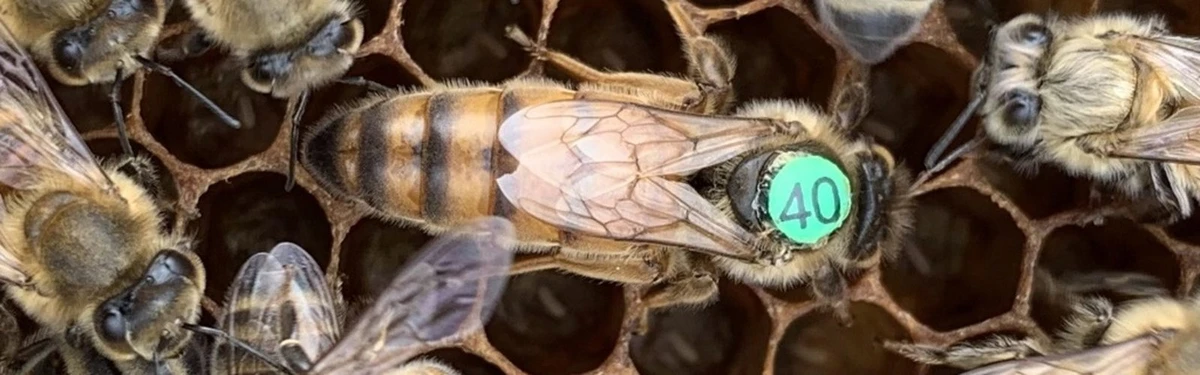
Mated Queen Bees
We supply high-quality Buckfast and Carniolan mated queen bees to beekeepers across the UK. Offering both UK-reared stock bred on our Warwickshire farm and carefully sourced European imports, our queens are selected to help apiaries build strong colonies, maintain calm temperaments, and establish reliable brood patterns.
Read more about our queen bees
Buckfast vs. Carniolan Queens
Both Buckfast and Carniolan queens perform well in the UK. The best choice for your apiary usually depends on your management style, location, and the local drone population, which influences future generations.
Why choose Buckfast queens?
- Calm Temperament: Generally bred to be gentle on the comb, allowing for relaxed, confident hive inspections.
- Steady Build-up: Known for expanding the colony smoothly through spring and summer without sudden, unmanageable surges.
- Resourceful: Selected for strong honey production and efficient overwintering on stores.
Why choose Carniolan queens?
- Rapid Spring Expansion: Known for fast early-season build-up, ideal for capturing early nectar flows or creating splits.
- Winter Efficiency: They typically form tight, highly efficient winter clusters.
- Management Needs: Their rapid expansion requires vigilant swarm control management during the spring.
If you are unsure which subspecies suits your needs, please contact us with your goals (e.g., honey production, replacing a failing queen, or calming a defensive colony) and we will be happy to advise.
Safe Delivery & Introduction
Introducing a new queen requires care and patience. Before ordering, please read our step-by-step guide on How to Introduce a Queen Bee and check our Sale of Live Bees Policy for our dead-on-arrival (DOA) replacement terms. You can also explore our Queen Bees FAQ page for detailed answers.
Filter By
Products List
- Product
- Qty in Cart
- Quantity
- Price
- Subtotal
-
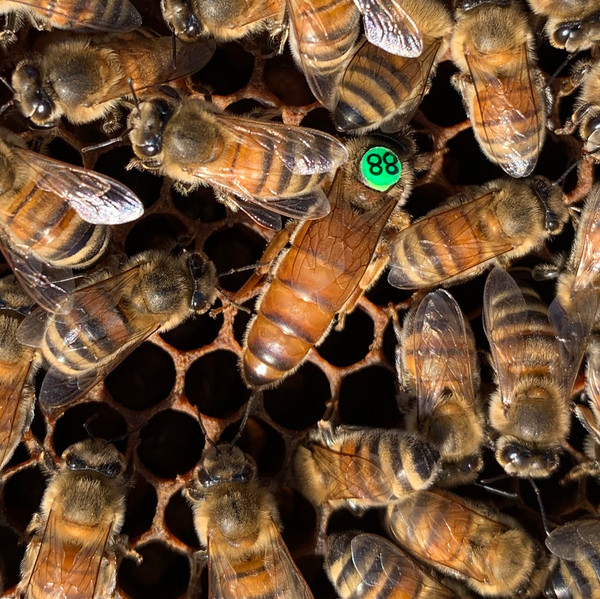
Buckfast Queen Bee
£39.00Imported 2026 F1 Buckfast queen bee, mated and marked accordingly for the year. Bulk discounts automatically applied, see below. Developed by Brother Adam, who was in charge of beekeeping from 1919... -

Carniolan Queen Bee
£39.00Imported 2026 Carniolan queen bee, mated and marked accordingly for the year. Bulk discounts automatically applied, see below. The Carniolan Honey bee is a subspecies of the Western Honey bee. Native... -

UK Produced Buckfast Queen Bee
£40.00UK Produced F1 Buckfast 2024 queen bee, mated and marked accordingly for the year. Developed by Brother Adam, who was in charge of beekeeping from 1919 at Buckfast Abbey in Devon in the United... -
Royal Mail Special Delivery Guaranteed by 1pm Add On
£10.20For use when accicentally ordering a queen bee with click and collect. Royal Mail Special Delivery Guaranteed by 1pm add on.
Our Queen Bee Breeding & Sourcing
UK-Bred Buckfast Queens
We use selected breeding stock to produce British queen bees for sale and for use in our own production colonies. We breed from Buckfast mother lines we favour for:
- Gentle Temperament: Selected to be workable and calm on the comb during hive inspections.
- Productivity: Bred for strong foraging drives to capitalise on spring and summer nectar flows.
- Brood Patterns: Selected for consistent laying patterns to build robust, cohesive colonies.
- UK Wintering: Proven breeding lines capable of managing stores efficiently through the English winter.
Imported Queens & Health Standards
We supply mated Buckfast and Carniolan queen bees to ensure availability early in the season when UK mating conditions are unpredictable:
- Reputable European Breeders: Sourced from trusted commercial breeders with warm early-season mating climates, selected for vitality and calm genetics.
- Official Health Certification: Accompanied by official veterinary health certification confirming apiary health standards.
- UK Biosecurity Compliance: Sourced and supplied in strict accordance with UK live bee movement legislation and health standards.
- Ready for Introduction: Supplied marked in a secure, ventilated travelling cage complete with attendant worker bees and a candy fondant plug.
Dispatch & Introduction Guidance
Dispatch & Care on Arrival
- Safe Postal Transit: Sent via Royal Mail Tracked 24 or Special Delivery Guaranteed (depending on your selection) in ventilated, protective travelling boxes.
- Immediate Care: Keep the cage indoors in a quiet, dimly lit room at stable room temperature (around 16°C–20°C).
- Hydration: Place a single, tiny drop of water on the cage mesh daily so the attendant bees can drink. Do not soak the cage.
- Introduce Promptly: Plan to introduce her into your queenless hive as soon as practically possible.
How to Introduce a Queen Bee
- Ensure Queenlessness: Verify the receiving colony is completely queenless and has realised its state before introducing the new cage.
- Slow Candy Release: Use the supplied cage with its candy plug intact to allow colony workers time to accept her scent before she is released.
- Minimise Disturbance: Avoid opening or inspecting the hive for at least 5 to 7 days following introduction to prevent the colony rejecting or "balling" the new queen.
For detailed, step-by-step instructions on queen acceptance techniques, please read our full guide on How We Introduce Queen Bees.
Frequently Asked Questions About Mated Queen Bees
Answers to common questions regarding delivery, marking, and introduction timing:
When are UK-reared vs imported mated queens available?
Imported Queens (April to September): Sourced from certified European partners where warmer spring climates allow for early mating. These are ideal for early-season re-queening and emergency replacements.
UK-Bred Queens (June to August): Raised and open-mated at our Warwickshire bee farm once local drone populations and British weather conditions are consistently warm and stable.
Are your queen bees marked, and what do they arrive with?
Yes. All of our mated queens arrive clearly marked on the thorax with the international colour code for their mating year. She is supplied in a ventilated introduction cage with attendant worker bees to groom and feed her, alongside a block of fondant/candy that feeds the bees during transit and acts as the slow-release plug inside the hive.
What happens if my queen arrives dead?
While we take every precaution to ensure safe transit, postal delays can occasionally affect live bees. Please refer directly to our Sale of Live Bees Policy for our exact dead-on-arrival (DOA) reporting procedures and replacement terms.
What should I do if I cannot introduce my queen immediately?
Keep the cage indoors in a quiet, dimly lit room at stable room temperature (around 16°C–20°C). Never place queen bees in a refrigerator, in a cold draught, or in direct sunlight, and do not leave them inside a vehicle. Place a tiny drop of water on the cage mesh once a day so the attendant bees can drink, and introduce her to the hive as soon as possible.
How long should I wait before checking if the new queen is laying?
Leave the colony completely undisturbed for at least 5 to 7 days after placing the introduction cage into the brood nest. Opening the hive too early while the bees are still adjusting to her pheromones can cause the colony to panic and kill the new queen. After 5–7 days, carry out a calm inspection to confirm she has been released safely and has started laying worker eggs.
