English Honey Varieties: Spring, Summer, Heather & Borage

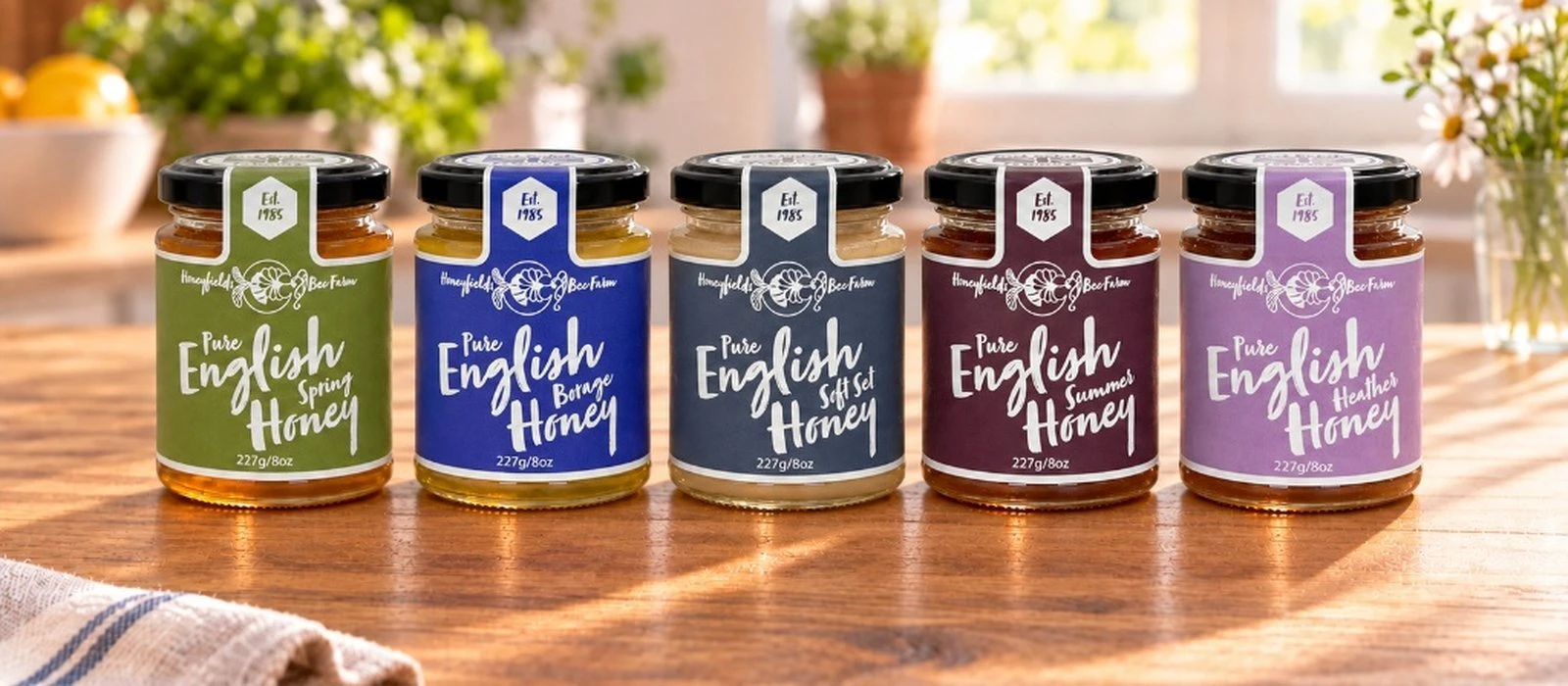
Spring, Summer, Heather or Borage? A Guide to English Honey Varieties
Why does English honey taste so different from jar to jar?
The short answer: it all comes down to the flowers. Our bees make honey from whatever is blooming within a few miles of the hive, so a jar from May tastes nothing like a jar from August, and honey from the Yorkshire moors is different again.
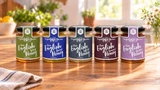
At Honeyfields Bee Farm we've been keeping bees in Warwickshire since 1985. Our spring and summer honey comes from our own hives across Warwickshire, Leicestershire and the West Midlands, while our borage and heather honey are produced for us by trusted bee-farming friends. Every variety is kept separate, never blended, and only gently warmed (no higher than 35°C, the temperature inside a hive) and coarsely strained. Here's what goes into each one, when it's harvested, and how to choose the right jar for you.
English Spring Honey
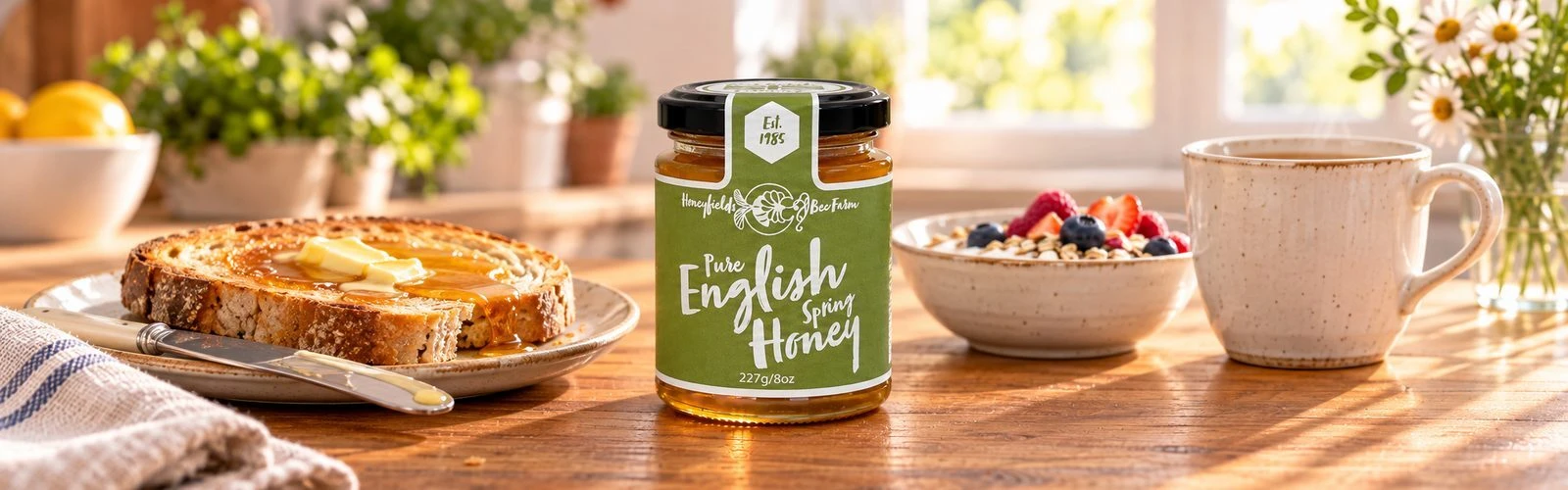
Spring honey is pale, mild and gently floral, and it sets quickly into a smooth, spreadable texture. It's our first major harvest of the year, made by our own bees across Warwickshire, Leicestershire and the West Midlands, and it won a Great Taste 1-Star Award in both 2023 and 2024.
What the bees forage on: oilseed rape is the big one, alongside field beans, dandelions, blackthorn, hawthorn, sycamore, pussy willow and horse chestnut. Our apiaries are also surrounded by fruit blossom in spring: apple, cherry, plum and pear.
When we harvest it: May and June. We extract it straight away, because honey rich in oilseed rape nectar can start to set in the comb within days. Leave it too long and it's almost impossible to get out of the frames.
Colour, taste and texture: freshly extracted, spring honey is a pale straw colour, turning an opaque off-white with a pearl-like sheen as it sets. The flavour is light and delicately floral, with a gentle, fresh sweetness and a smooth, clean finish that doesn't linger. Spring nectar is high in glucose, which crystallises quickly, so within a few weeks the honey sets naturally into a fine-grained, spreadable texture. If you prefer it runny, stand the jar in warm water (under 40°C) and stir until clear.
Best for: porridge, yoghurt and toast, green or chamomile tea, and fresh cheeses like goat's cheese or brie.
English Summer Honey
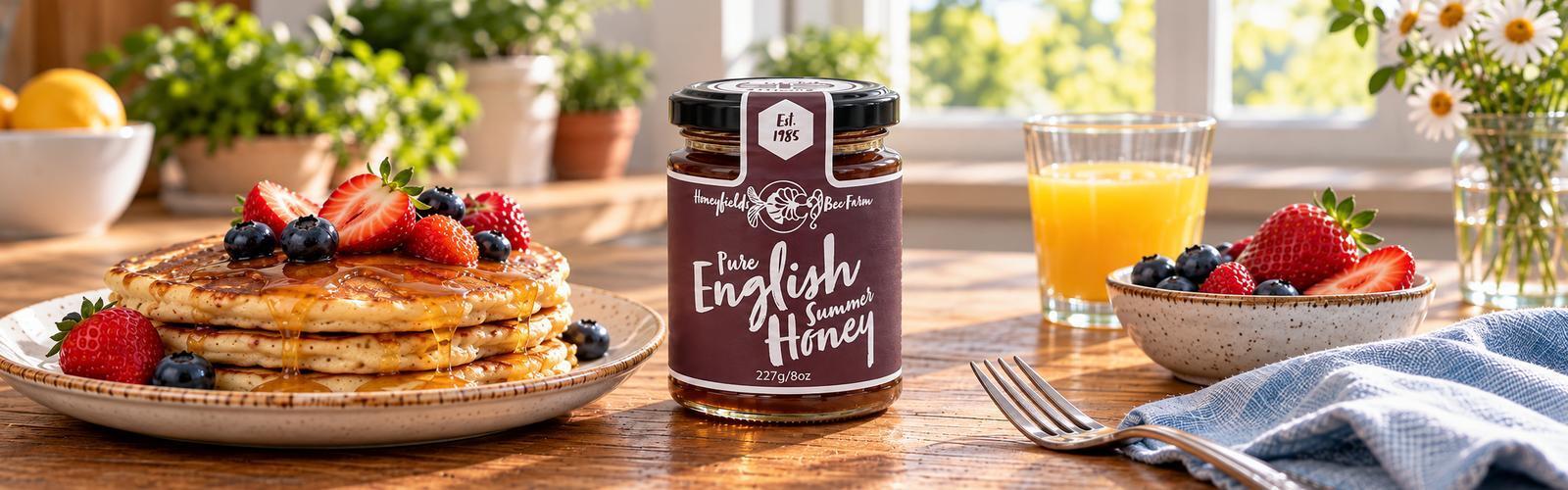
Summer honey is golden amber, fuller and more rounded than spring honey, and it stays runny much longer. It's our most popular everyday honey, made by our own bees across Warwickshire, Leicestershire and the West Midlands. It won a Great Taste 1-Star Award in 2023 and a Bronze Award at the Farm Shop & Deli Product Awards in 2024.
What the bees forage on: bramble (blackberry), clover, lime trees, sweet chestnut, rosebay willowherb, sunflowers and Himalayan balsam. The mix shifts with the weather each year, so no two summers taste quite the same.
When we harvest it: from the last week of July and right through August, we take the full supers off the hives and stockpile them in our honey house. Extracting it all then takes us the whole of September and most of October. Summer honey has a more even balance of glucose and fructose than spring honey, so it doesn't set in the comb and can safely wait its turn.
Colour, taste and texture: a warm, translucent golden amber that glows when the light catches the jar. The flavour is fuller and more rounded than spring honey, a classic wildflower sweetness with gentle caramel notes, and it varies a little from year to year with the summer's flowers. It has a smooth, velvety body and pours easily, staying runny for months. Like all unprocessed honey it may eventually set, especially in a cool kitchen over winter.
Best for: drizzling over yoghurt and crumpets, baking, sticky glazes for roast vegetables or chicken, and cheese boards with mature cheddar or Stilton.
English Borage Honey
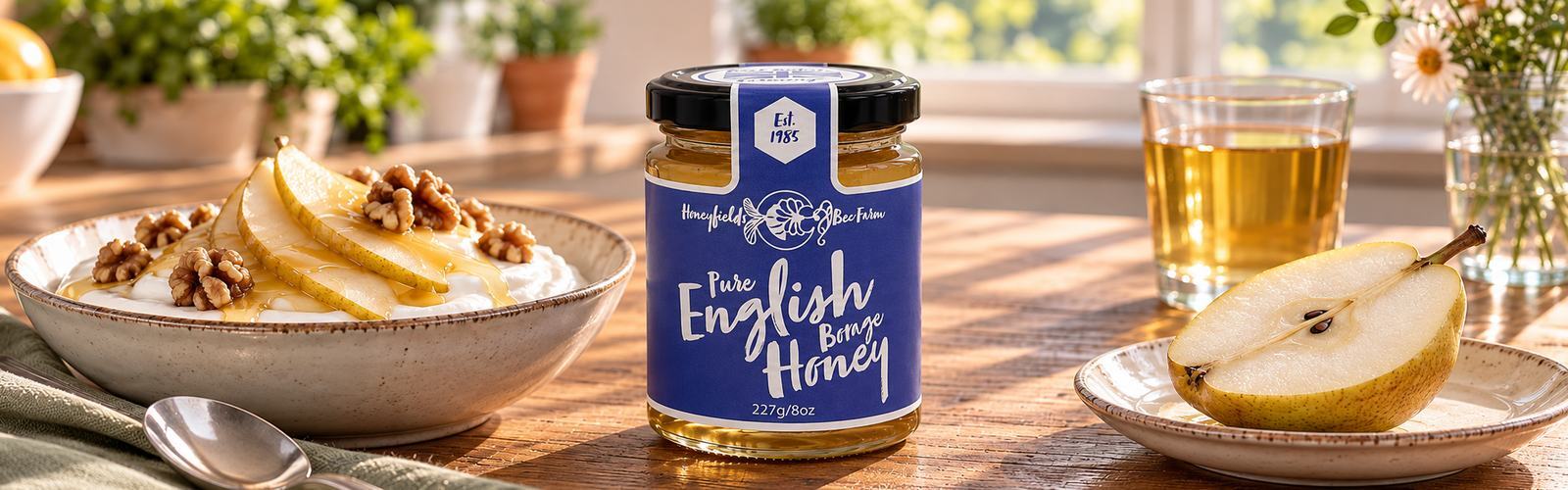
Borage honey is one of the palest, mildest honeys you can buy, and it stays clear and runny for months. It's produced for us by a trusted beekeeping friend in south-west Warwickshire, whose hives sit right alongside fields of borage, also known as starflower. It won a Great Taste 1-Star Award in 2025.
What the bees forage on: the bright blue flowers of borage (Borago officinalis), a farm crop grown for starflower seed oil. Because the bees work a single crop, it's a true single-flower honey.
When it's harvested: late July, and extracted straight away.
Colour, taste and texture: very pale and clear, from almost water-white to the lightest straw, deepening only slightly over time. The flavour is clean and mild, with a gentle sweetness and a faint, fresh herbal note, so it sweetens without masking other flavours. It's light-bodied and pours easily. Borage nectar is high in fructose, which stays liquid, so the honey is slow to set and usually stays runny for many months.
Best for: green, white, jasmine and chamomile tea, where a stronger honey would mask the flavour, plus fruit, yoghurt and mild cheeses like ricotta or burrata.
English Heather Honey
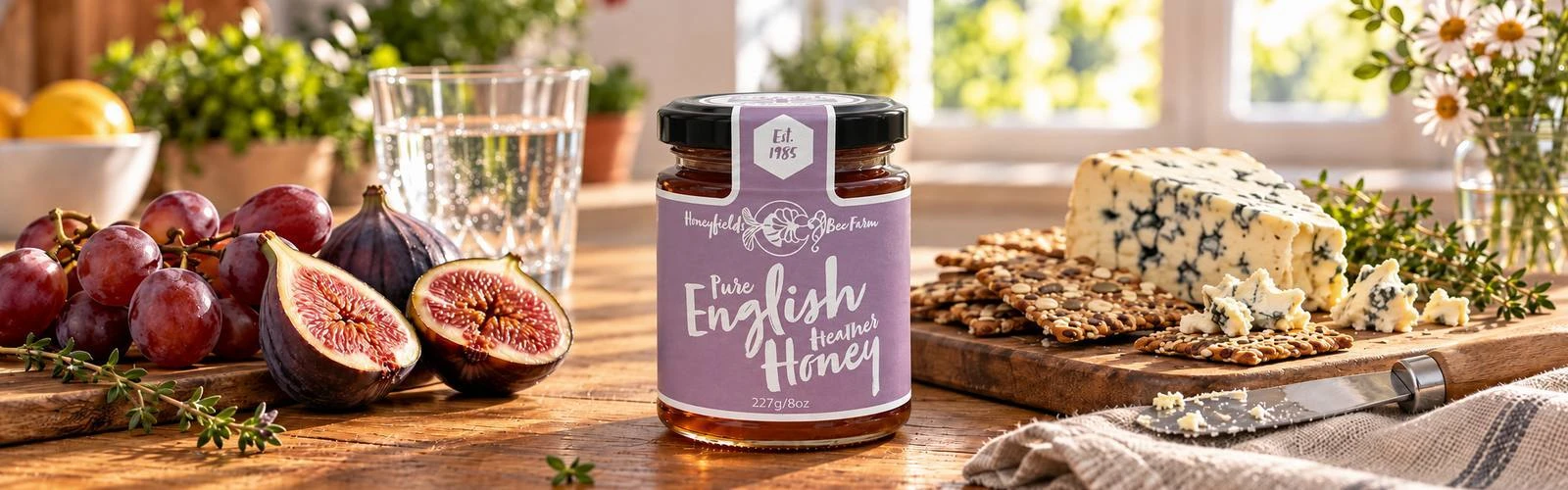
Heather honey is the boldest honey we sell: aromatic, slightly savoury and with a unique jelly-like texture. It's produced for us by a close bee-farming friend whose hives are on the Yorkshire moors, so our own bees can stay in their home apiaries. In 2025 it won 3 stars at the Great Taste Awards, the top rating.
What the bees forage on: ling heather (Calluna vulgaris), which carpets the moors in purple for a few short weeks at the end of summer. It's the last major honey harvest of the British year.
When it's harvested: late August and September, with extraction in September and October.
Why it's like jelly: ling heather honey is thixotropic. It rests as a soft gel in the jar, turns liquid when you stir or spread it, then sets back to a gel. It won't spin out of the comb like other honeys, so it has to be loosened first or pressed out, which takes extra time and equipment. Tiny air bubbles trapped during extraction stay suspended in the jar, a hallmark of the real thing.
Colour, taste and texture: a rich amber-bronze with a reddish warmth, often dotted with tiny suspended air bubbles. The flavour is the most intense of all our honeys: earthy and full-bodied, with caramel notes, subtle herbal and smoky undertones, and a long, lingering finish. It sits in the jar as a soft, spoonable jelly that loosens as you stir or spread it, then slowly firms up again.
Best for: cheese boards with Stilton or mature cheddar, glazes for roast pork, duck or sausages, and a spoonful in a winter hot toddy.
English Soft Set Honey
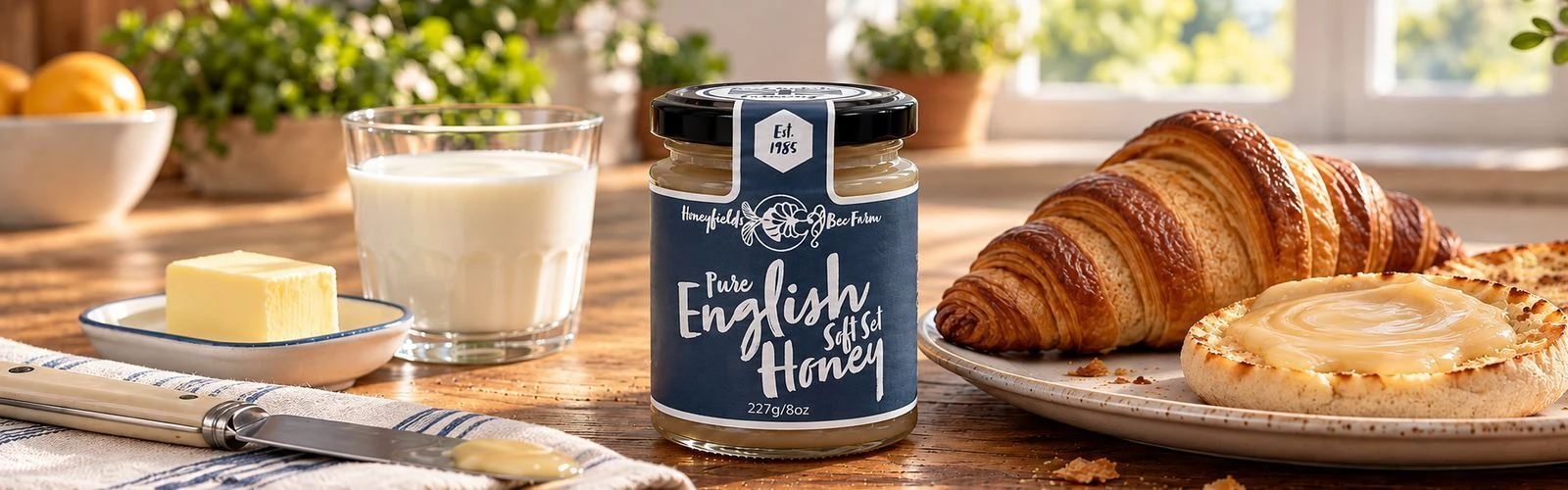
Soft set honey isn't a different flower, it's a different texture. It's pure honey that has been guided to set with tiny crystals, giving a thick, creamy spread that stays put on your toast. Sometimes called creamed honey, it contains no cream, dairy or anything else, just honey. It won a Silver Award at the Farm Shop & Deli Product Awards in 2024.
What it's made from: our own spring or summer honey, from hives across Warwickshire, Leicestershire and the West Midlands.
How we make it: we mix liquid honey with a small amount of previously set honey that already has very fine crystals. We then stir it slowly at a cool temperature over several days. This encourages millions of tiny crystals to form rather than large, gritty ones, which is what makes the texture so smooth.
Colour, taste and texture: pale and opaque, a soft creamy-gold colour. The flavour is mild and gently floral, much like our spring honey. The texture is smooth, thick and buttery: it scoops cleanly from the jar and spreads without tearing the bread or dripping off the edges. It stays spreadable at normal room temperature but firms up in the fridge, so keep it in the cupboard.
Best for: warm buttered toast, crumpets and croissants, scones with clotted cream for afternoon tea, swirling into porridge or dolloping on yoghurt, and whipping into soft butter for homemade honey butter.
Which English honey should I choose?
| Honey | Harvested | Colour | Taste | Texture | Best for |
|---|---|---|---|---|---|
| Spring | May to June | Pale straw, sets off-white | Light, delicate floral | Sets quickly, spreadable | Porridge, toast, green tea |
| Summer | Late July to August | Golden amber | Rounded wildflower, caramel notes | Runny for months | Drizzling, baking, glazes |
| Borage | Late July | Very pale, clear | Clean, mild, faintly herbal | Runny, slow to set | Delicate teas, fruit |
| Heather | Late August to September | Amber-bronze | Earthy, caramel, smoky | Soft jelly | Cheese boards, roasts, hot toddies |
| Soft set | Made from spring or summer honey | Pale, opaque | Mild, floral | Smooth, no drips | Toast, crumpets, scones |
Can't decide? Our honey gift sets are a good way to taste several side by side.
Frequently asked questions
Has my honey gone off if it's set solid?
No. Crystallisation is a natural process and doesn't mean the honey has spoiled. Stand the jar in warm (not hot) water and stir gently to make it runny again.
Why does spring honey set so much faster than summer honey?
Spring honey contains a lot of oilseed rape nectar, which is high in glucose. Glucose crystallises much more readily than fructose, so the honey sets within weeks.
Why is heather honey more expensive?
The heather bloom lasts only a few weeks, unpredictable moorland weather can stop the bees flying, and the jelly-like honey needs specialist equipment to extract. That all adds up to a small, hard-won harvest.
Is your honey blended with imported honey?
No. Every jar is 100% English honey and each variety is kept separate. Spring and summer honey come from our own hives; borage and heather are produced by bee-farming friends we've worked with for years.
Can babies eat honey?
No. Honey shouldn't be given to babies under 12 months old.
Beekeeping Guides & Practical Advice.
Why Has My Honey Gone Solid? How to Make It Runny Again

Introducing a Queen Bee - Honeyfields Bee Farm