Why Has My Honey Gone Solid? How to Make It Runny Again
Why Has My Honey Gone Solid? How to Make It Runny Again
Is solid honey safe to eat, or has it gone off?
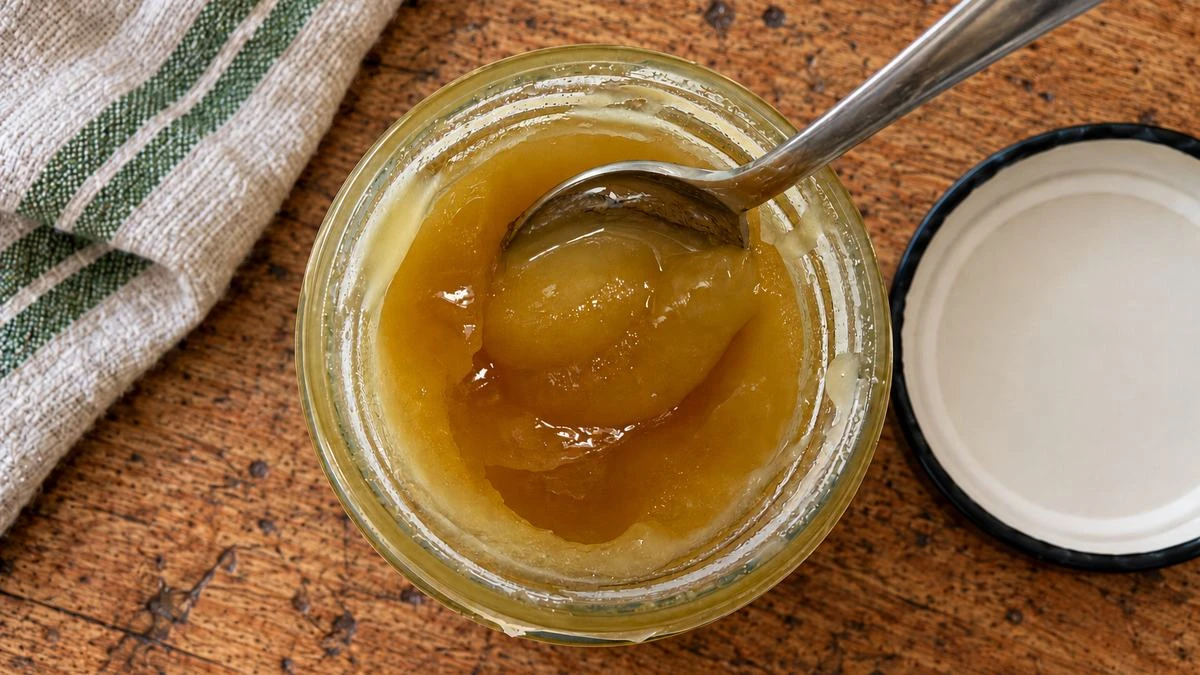
No. If your runny honey has turned thick, cloudy or solid, it has simply crystallised (or "set", as beekeepers say). It's completely natural, perfectly safe to eat, and tastes just as good. In fact, setting is what real, unprocessed honey does.
At Honeyfields Bee Farm we tell every customer to expect it: all honey sets eventually, some varieties just take longer than others. Our spring honey sets fastest of all, often within a few weeks. Below we explain why it happens, how to make your honey runny again safely, and how to store it so it stays runny for longer.
Why does honey go hard? Crystallisation explained
Honey is roughly four-fifths sugar and less than a fifth water. That's far more sugar than the water can comfortably hold in solution, so honey is naturally a little unstable. Sooner or later, some of the sugar comes back out as crystals.
The two main sugars in honey are fructose and glucose, and they behave very differently. Fructose dissolves easily and stays liquid. Glucose is much less soluble, so it gradually separates out and forms tiny solid crystals. Once a few crystals form, they act as a framework for more, and the setting spreads through the jar. Because the fructose stays liquid, a set jar sometimes has a thin runny layer on top or around the edges, which is perfectly normal.
Three things decide how quickly that happens:
- The flowers. Every nectar source gives a different balance of glucose and fructose. The more glucose, the faster the honey sets.
- Temperature. Honey sets fastest when it's cool, at around 10–15°C. That's why many jars set in autumn and winter, when kitchens and cupboards get colder.
- Tiny particles. Specks of pollen give crystals something to form around. Our honey is only coarsely strained: the strainer catches the wax, but tiny traces of natural pollen pass through and stay in the honey.
Some mass-produced honey is heated and finely filtered before bottling, partly so it stays runny on the shelf for longer. We'd rather keep our honey as close as possible to how it left the hive, and accept that it will set.
Why does spring honey set so much faster?
It's all down to oilseed rape. Those bright yellow fields are one of our bees' main spring nectar sources, and oilseed rape nectar is unusually high in glucose. Add dandelions, another high-glucose flower, and you get a honey that's primed to set.
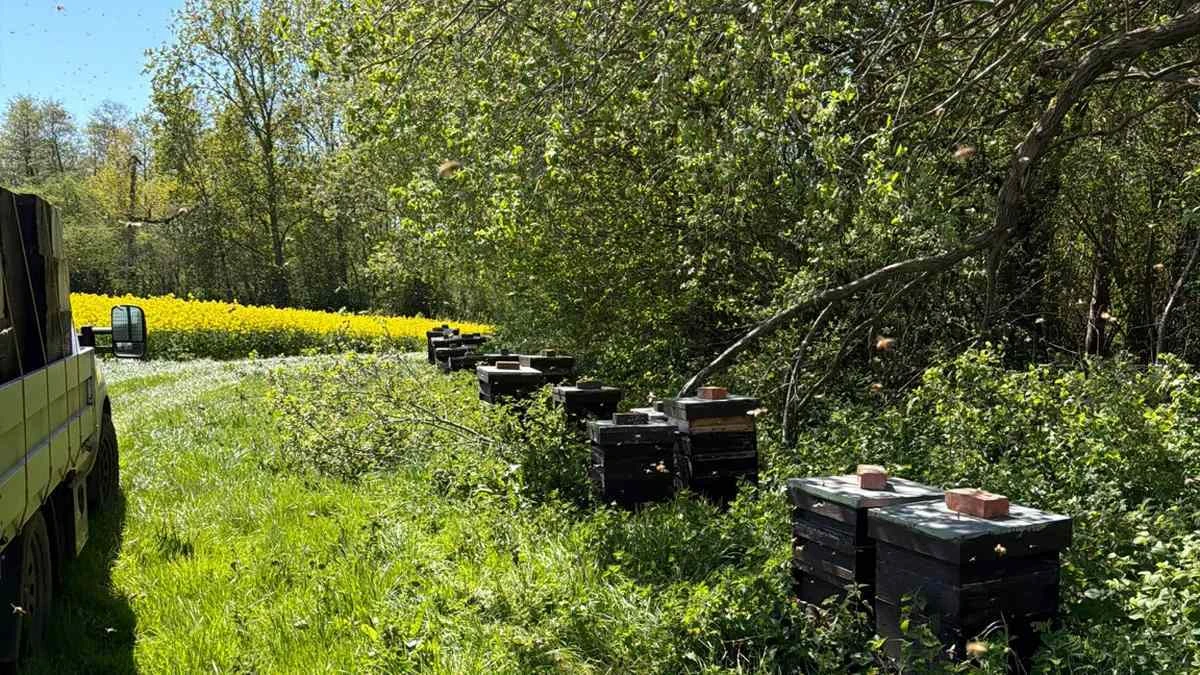
Spring honey sets so quickly that it can start crystallising in the comb within days. That's why we extract it straight away after harvesting in May and June. Once it's in the jar, it usually sets within a few weeks into a fine-grained, smooth, spreadable honey.

Our other honeys set more slowly:
- Summer honey comes from a wider mix of flowers, with a more even balance of glucose and fructose. It stays runny for months, though it will often set as the weather cools.
- Borage honey is high in fructose, so it's the slowest to set and can stay clear and runny for many months.
- Heather honey is different again. It's naturally jelly-like rather than runny, so it doesn't crystallise in the same way.
As a rule, honey that sets slowly tends to form larger, grainier crystals than honey that sets quickly, which is why fast-setting spring honey ends up so smooth. You can read more about each variety in our guide to English honey varieties.
How to make hard honey runny again
The gentlest way is to warm the jar slowly in a pan of warm water. It takes a little patience, but it protects the honey's flavour and natural character.
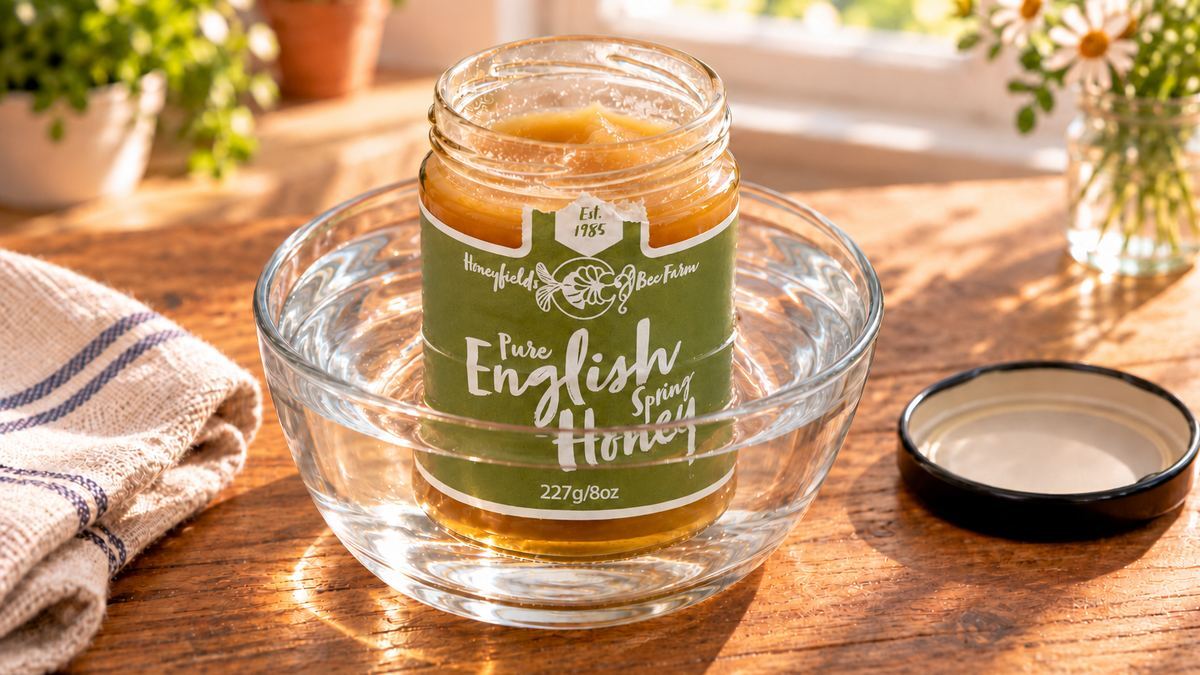
- Take the lid off so the jar isn't sealed while it warms.
- Stand the jar in a pan or bowl and pour in warm water so it comes up to roughly the level of the honey. Use hand-hot water, never boiling.
- Leave it to warm, stirring the honey every so often to spread the heat and break up the crystals.
- Top up with more warm water as it cools. Depending on how solid the honey is, it can take anything from 20 minutes to an hour or two.
- Stop once it's clear and runny. Try not to let the honey itself get hotter than about 40°C. For reference, the inside of a beehive is around 35°C.
A few tips:
- Glass jars don't like sudden temperature changes. If your honey has been somewhere cold, don't plunge it straight into very hot water, as the glass could crack.
- Only warm what you need. If you use honey slowly, spoon some into a smaller jar and warm that instead, so the rest isn't heated over and over.
- Expect it to set again in time. Warming dissolves the crystals, but the glucose is still there. You can warm it again whenever you need to.
Why you shouldn't microwave honey
It's tempting to pop a set jar in the microwave for a few seconds, but it's the quickest way to spoil good honey. Here's why:
- It heats unevenly. Microwaves create hot spots, so parts of the honey can get far hotter than the rest, even if the jar only feels warm. Those hot spots can scorch the honey and leave it with a dull, burnt or caramelised taste.
- It damages the honey's natural enzymes. Honey contains enzymes added by the bees, such as diastase and invertase. They're sensitive to heat, and studies have found microwaving reduces them noticeably, even after short bursts.
- It changes the honey's chemistry. Overheating raises the level of a compound called HMF. Food standards use HMF as a sign that honey has been overheated or stored badly, so it's a clear marker that the honey is no longer at its best.
- It can be messy or unsafe. Honey can bubble up and boil over, metal lids can't go in the microwave, and very hot honey sticks to skin and can cause nasty burns.
A pan of warm water takes a little longer, but it warms the honey evenly and gently, which is exactly what you want.
How to store honey (and why not in the fridge)
Honey doesn't need refrigerating. Its high sugar content and natural acidity mean it keeps beautifully at room temperature. The best place for it is a kitchen cupboard:
- Keep it at a steady room temperature, ideally around 20°C. Warmer, stable conditions slow down setting. Avoid cold spots like a garage, porch or outside wall.
- Keep it away from heat. Not next to the cooker, on a sunny windowsill or above a radiator, as too much warmth affects flavour over time.
- Keep the lid on tight. Honey absorbs moisture from the air, and if it takes on too much water it can start to ferment.
- Use a clean, dry spoon. Crumbs, butter or water dropped into the jar can spoil it.
Why not the fridge? Cold encourages honey to set, and in our experience honey kept at low single-figure temperatures, like those in a fridge, sets quickly. Chilled honey also turns thick and stiff, so even runny honey becomes hard to spoon or spread. Keep it in the cupboard and it will stay runny for much longer.
Prefer your honey set? Try soft set
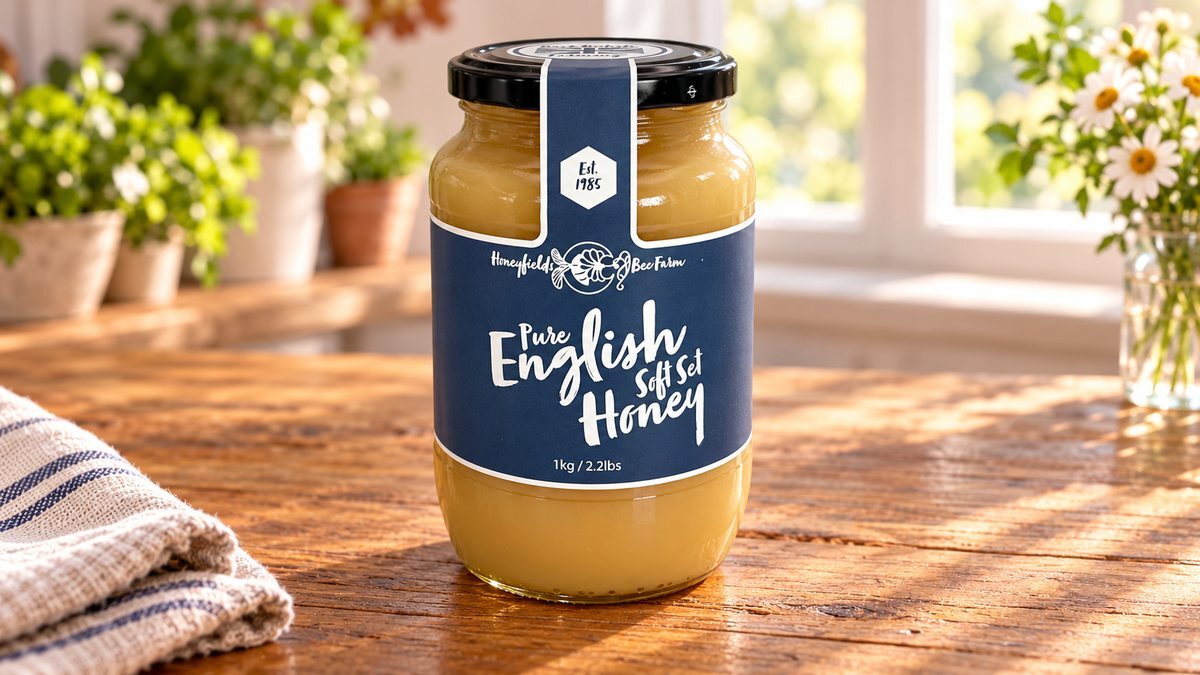
Plenty of people actually prefer set honey, because it spreads easily and doesn't drip off your toast. Our soft set honey takes that idea and perfects it. Rather than leaving the honey to set on its own, we speed the process up and control it: we mix in a little finely set honey and stir it slowly at a cool temperature over several days. The result is a smooth, creamy honey with no gritty crystals, and nothing added but honey.
Frequently asked questions
Is crystallised honey safe to eat?
Yes, completely. Setting is a natural change in texture, not a sign of spoiling. Many people prefer it, as it's easier to spread.
Does set honey mean sugar has been added?
No. Crystallisation is something natural honey does on its own, as the glucose it already contains comes out of solution. No sugar needs to be added for it to happen. That said, setting isn't proof of purity on its own: some genuine honeys stay runny for a long time, and honey mixed with syrup can still set. The best guarantee is buying from a beekeeper you trust.
Why are there white streaks or patches near the top of my jar?
This is known as "frosting". As honey sets it shrinks very slightly, letting tiny air pockets form against the glass, which look white. It's purely cosmetic and doesn't affect the taste.
Can I stop my honey from setting?
You can slow it down by keeping it in a cupboard at a steady room temperature, but you can't stop it forever. If you prefer runny honey, our summer and borage honeys stay runny the longest.
How many times can I re-warm honey?
As often as you need, as long as you warm it gently in warm water each time. To protect the flavour, warm only as much as you'll use soon.
Should I add a little water to help it melt?
No. Never add water to honey. Its low water content is what keeps it from spoiling, and even a small amount of extra water can make it ferment. Warm water should only ever go around the jar, not in it.
Does honey ever go off?
Stored with the lid on in a cool, dry cupboard, honey keeps for a very long time. Jars carry a best before date, but honey doesn't suddenly spoil after it. The one thing that can spoil honey is moisture. If a jar is left open, or a wet spoon goes in, the top layer can take on water and start to ferment. You'd notice a sour or slightly boozy smell, and sometimes foam on the surface. Keep the lid on and use a clean, dry spoon, and it won't happen.
Beekeeping Guides & Practical Advice.
Why Has My Honey Gone Solid? How to Make It Runny Again


Introducing a Queen Bee - Honeyfields Bee Farm